
"Can you just paint it the same as the neighbours?" We hear that on a lot of terraces. Sometimes the answer is yes. As heritage painters in Sydney, we'd rather show you what the house looked like in 1890 first. Nine times out of ten it beats the neighbours.
Get a Free On-Site QuoteOld houses need different paint and a different hand. Victorian and Federation walls are soft brick and lime, built to let moisture out. Cover them in a modern plastic-film acrylic and the damp gets trapped, the paint blisters and the render behind it starts to go. Heritage painting starts with what the wall is made of.
We repaint Victorian terraces, Federation houses, Californian bungalows and sandstone cottages across Sydney. Inside that's lime plaster walls, ornate ceilings, cornices, roses, panelled doors and staircases. Outside it's render, weatherboards, double-hung windows, verandahs, timber fretwork and cast-iron lace.
For the last 15 years, period homes have been most of our work. The streets of Paddington, Woollahra, Balmain and Glebe are full of them. A good number sit in heritage conservation areas, and we've worked under those rules for years.
The detail is where heritage painting is won or lost. A Federation fretwork panel, a Victorian ceiling rose, a staircase with 40 turned balusters. Each one is a day of brush work if it's done right, and we price it that way so you can see it on the quote.
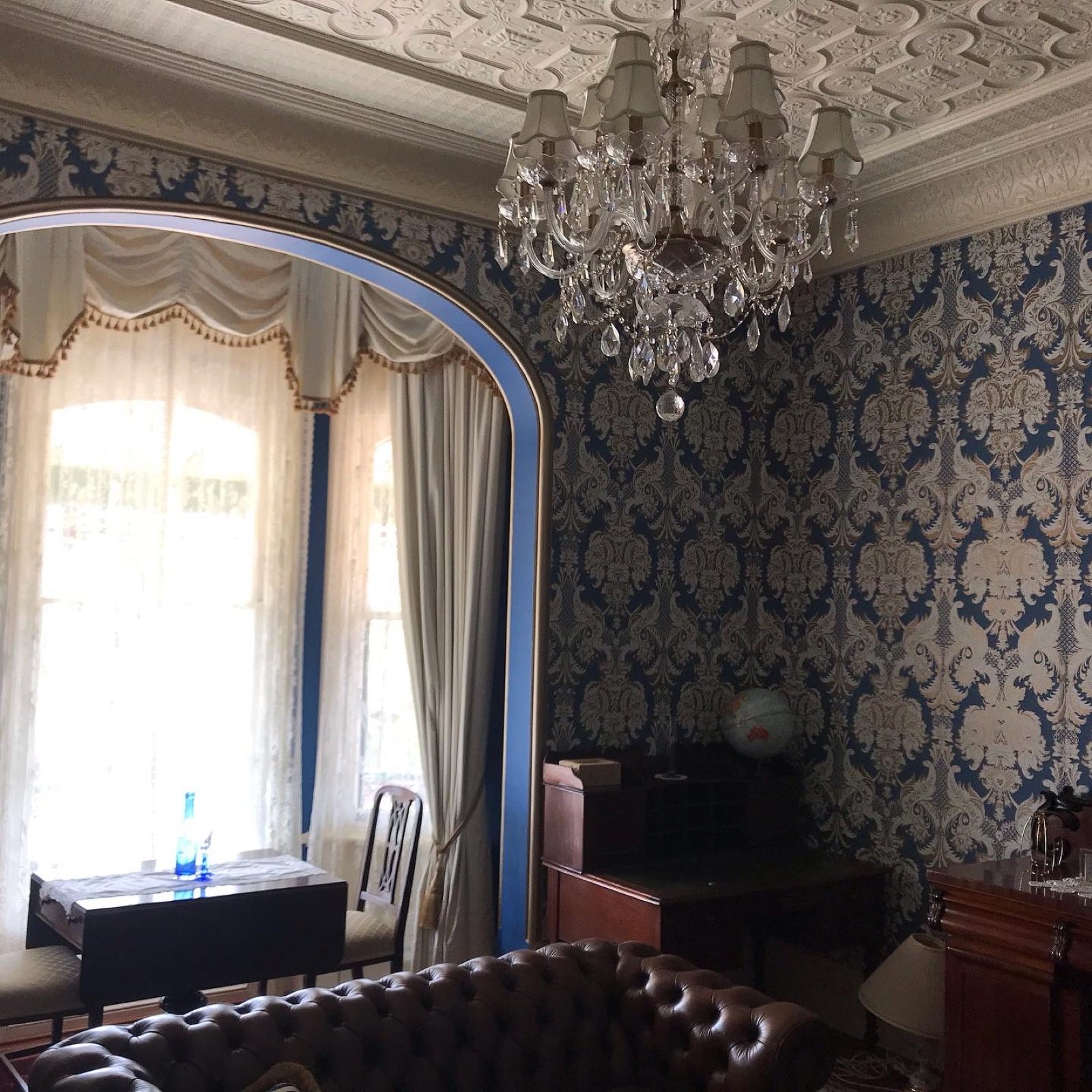
Colour is where most owners get stuck, so we help. On a period home the answer is in the house. Scrape back a layer or two on a sheltered piece of trim and you'll find the original colours. Victorian terraces carried deep, earthy schemes: Indian red, Brunswick green, stone, deep brown and cream. Federation houses ran red brick with cream or white trim and green accents.
A scheme that works on a Sydney terrace: a stone or warm grey on the walls, a darker trim colour on the window frames and fascias, and a third, deeper colour picking out the lace, the cornice line and the front door. The detail reads from across the street and the house looks deliberate.
Grey and white everything is the colour scheme of the decade. Fine on a 2010 townhouse. On an 1885 terrace it flattens every bit of detail the builder put there. Our guide to choosing a heritage colour scheme goes through the eras one by one.
Old walls need to move moisture. On lime render, lime plaster and soft brick we use breathable paint: mineral silicate paints, limewash or vapour-permeable heritage acrylics. They let water vapour pass out through the film, so the damp doesn't build up behind it. Here's why old walls need to breathe.
Timber joinery is the opposite. Windows, doors and weatherboards want a tight, durable film to keep water out: oil-based primer on bare timber, then two coats of quality enamel or exterior acrylic.
Detail work is slow, and we don't rush it. Cornices get brushed so the profile stays sharp, never sprayed until it's a blob. Lace gets a small brush and a lot of time. We give each coat its full recoat time, even when the sky looks clear and the job's running late.
We check what the walls are made of, how many paint layers there are, whether there's lead, and where the damp sits.
We scrape back for original colours where we can and settle on a scheme that suits the era and the street. Council rules checked if they apply.
Render and plaster repaired in lime, timber spliced, failing paint stripped, everything primed for its material.
Breathable paint on masonry, enamel on joinery, cornices and lace brushed by hand in three colours where the scheme calls for it.
We walk inside and out with you, in daylight, and fix anything before we call it done.
| Area | Included | Paint system |
|---|---|---|
| Exterior masonry | Rendered facades, painted brick, parapets, chimneys | Mineral or breathable heritage paint |
| Exterior timber | Weatherboards, fascias, bargeboards, fretwork, verandah posts | Oil primer plus two coats exterior acrylic or enamel |
| Windows and doors | Double-hung sashes, panelled front doors, leadlight frames | Primer plus two coats enamel |
| Interior walls and ceilings | Lime plaster walls, ceilings, ceiling roses | Breathable or low sheen acrylic matched to the plaster |
| Interior detail | Cornices, mouldings, architraves, staircases | Brushed flat on plaster, enamel on timber |
| Ironwork | Cast-iron lace, railings, front fences | Rust-inhibiting primer plus two coats enamel |
In most houses, yes. We scrape back a small area on sheltered trim or under a later layer to find the original colours, then match them to modern paint. Where nothing survives, we work from period colour cards and houses of the same era on your street.
Yes. Inside we paint lime plaster walls, ornate ceilings, cornices, roses, panelled doors and staircases. Outside we paint render, weatherboards, windows, verandahs and lace.
No. A large part of the inner west, eastern suburbs and lower north shore is in a conservation area. Repainting in existing colours is straightforward almost everywhere, while a colour change on a listed heritage item can need council sign-off. We'll tell you which applies and help with the colour schedule.
Breathable paint: mineral silicate, limewash or a vapour-permeable heritage acrylic, depending on the wall and what's already on it. Standard exterior acrylic forms a tighter film that traps moisture in soft brick and lime render.
A single-fronted terrace facade with a verandah and lace takes 1 to 2 weeks, depending on how much repair it needs and whether it needs scaffold. A double-fronted house with a two-storey verandah runs 2 to 4 weeks.
Yes, if it's well bonded. Sound lead paint sealed under new coats is safe and we leave it there. Flaking lead paint gets removed wet and contained before we paint, and we test anything painted before 1970 so we know which is which.
We take on heritage painting for homes right across Sydney, from the terraces of Paddington to the period homes of Hunters Hill. A few of the areas we cover:
Book a free on-site visit. One room or the whole house, we look at it in person and send you a written, itemised quote. Nothing to sign.
Book Your Free Quote