
Stand across the street from a terrace in Paddington and look up. Parapet, cornice, string course, window hoods, a two-storey verandah dripping in lace. Heritage facade restoration in Sydney is bringing all that back, piece by piece, so the frontage reads the way the builder drew it.
Get a Free On-Site QuoteIt's also where the weather hits hardest. Parapets catch rain on three sides. Cornices crack where water sits on top of them. Window sills hold water against the render. Lace rusts from the inside out wherever the paint's broken. So a facade that looks tired from the footpath is failing up close.
We repair the detail and then we paint it, same team. The person who re-ran your cornice is the person who primes it, and the one who'll answer the phone if it cracks.
Most of our facade work is in the terrace suburbs: Paddington, Surry Hills, Glebe and Balmain, plus the bigger Victorian and Federation houses in Hunters Hill and Woollahra. Plenty of those frontages sit right on the footpath, which means scaffold, permits and a bit of planning.
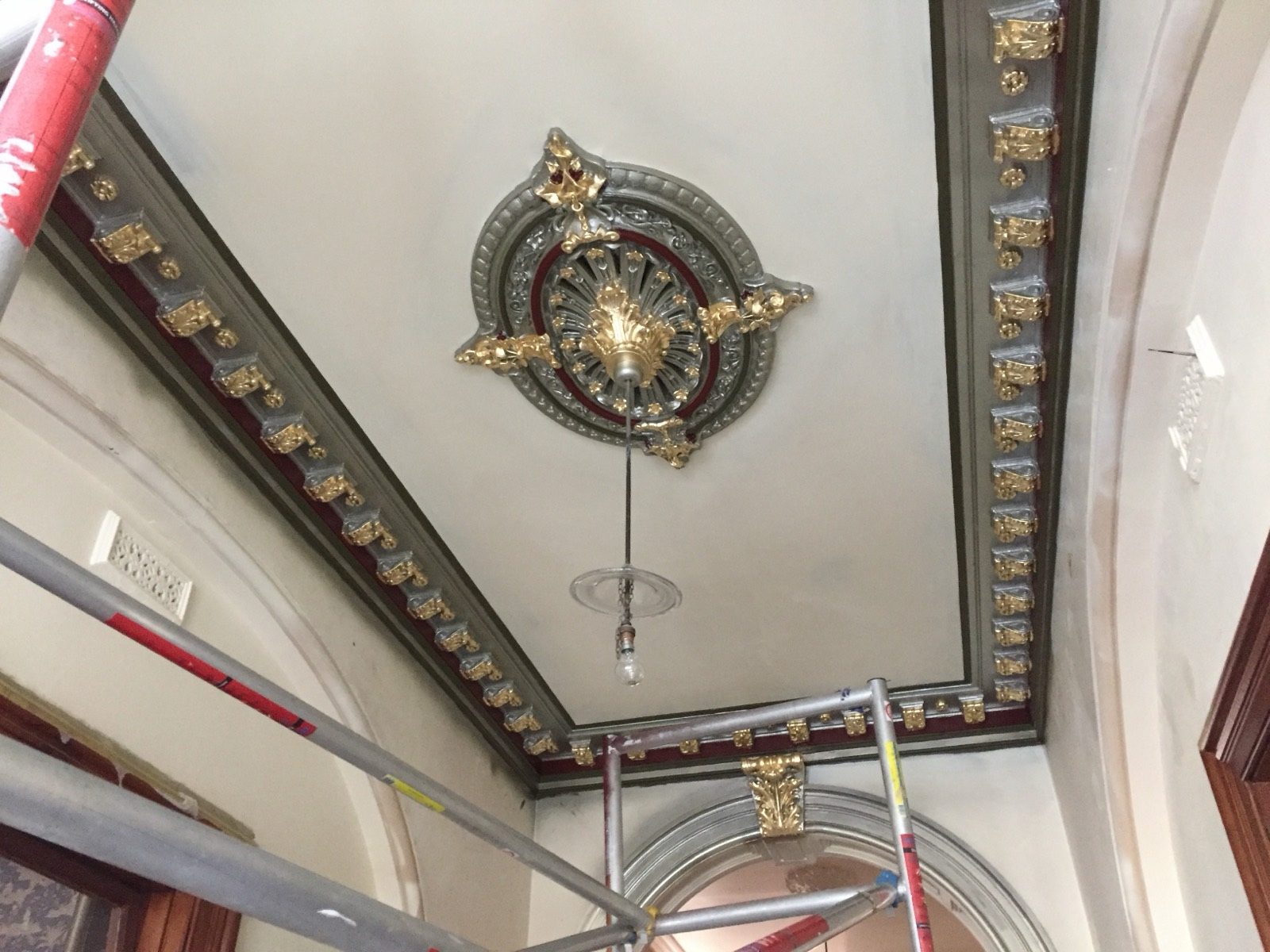
Most of a heritage frontage is its detail. When a section of cornice breaks away, we cut a steel or timber template to the existing profile and run the new section in place, so it matches the rest down to the millimetre. A pre-made moulding from a catalogue never quite matches, and from the street you can see it.
Cracked render gets cut out and replaced in a lime mix that matches the original. Loose sections of parapet capping get re-bedded. Sandstone sills and steps get repaired with lime mortar and left to weather in.
Facade elements we repair and repaint:
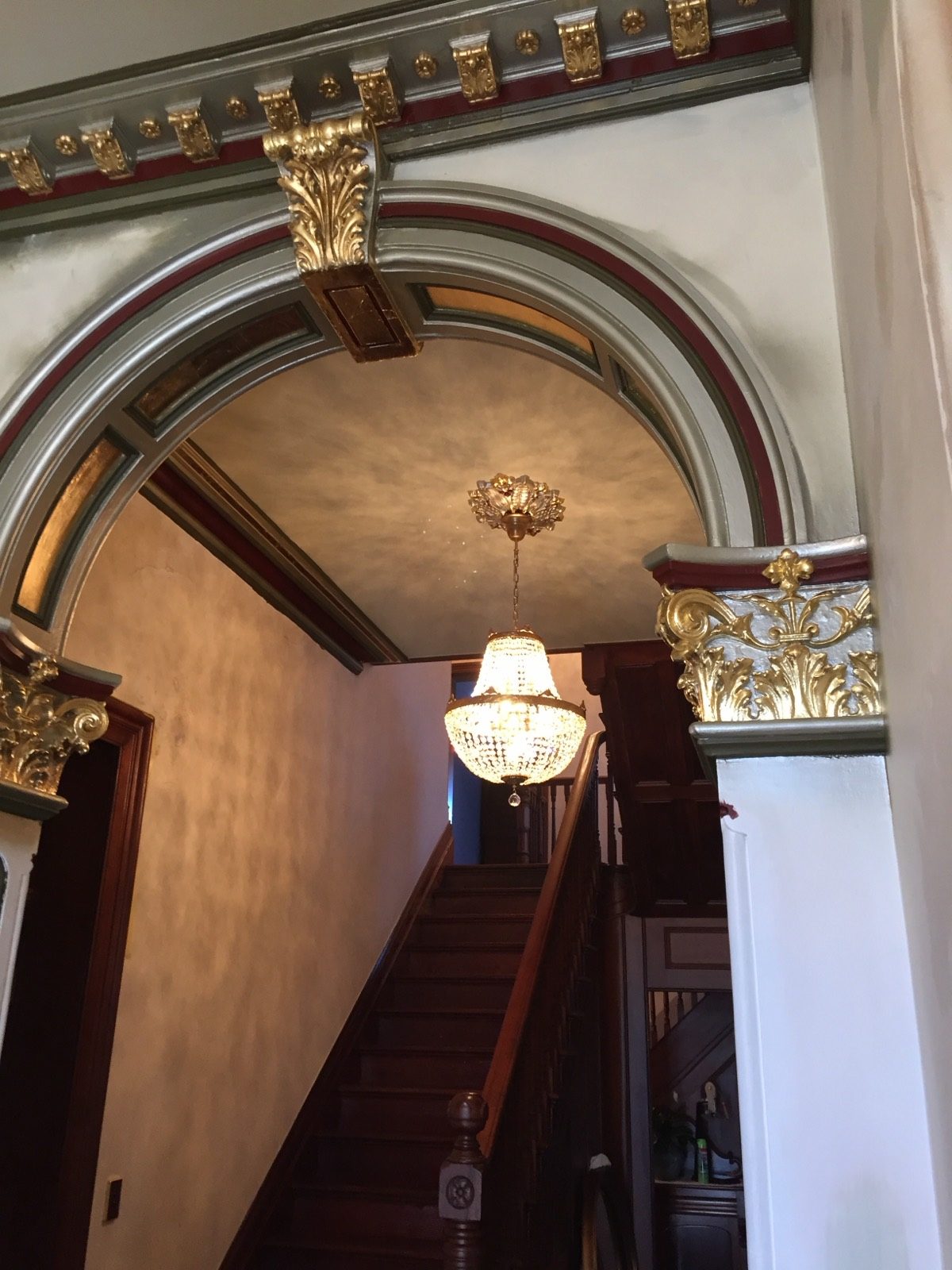
Verandah lace is the signature of a Sydney terrace, and it's the bit most painters skip. Rolling one quick coat over 100 years of flaking paint fills in the pattern and seals rust in underneath. In two years it's bubbling.
We wire brush the lace back to sound metal, treat any rust, prime with a rust-inhibiting primer and finish with two coats of enamel, all by brush. Cracked or missing panels get repaired or recast to match. Slow work. You can see the pattern again from across the street.
Our post on restoring cast-iron lacework goes through the full process, including when a panel can be saved and when it has to be recast.
From the street and up close: tap the render, check the parapet capping, test the lace for rust and loose fixings, photograph every fault.
Scaffold designed for the frontage. Where it stands on the footpath, we organise the council permit.
Cornice re-run to profile, render cut out and replaced in lime, sills repaired, lace cleaned back to sound metal.
New lime work left to cure before paint. We plan other work around it.
Breathable sealer on masonry, rust-inhibiting primer on iron, oil primer on bare timber.
Colours set so the detail reads from the street, every moulding and panel of lace brushed by hand.
| Feature | What goes wrong | Work involved |
|---|---|---|
| Parapet and capping | Cracks, loose capping, water getting in from above | Re-bed capping, repair render, seal the top surface to shed water |
| Cornice and string course | Broken sections, cracks along the top | Re-run lost sections in place to the existing profile |
| Window hoods and sills | Cracked render, water sitting on the sill | Repair in lime, form a proper drip edge, seal |
| Cast-iron lace | Rust, broken panels, pattern filled with paint | Wire brush, treat rust, repair or recast, prime and enamel |
| Timber joinery | Rotten sills and rails, stuck sashes | Splice in new timber, free sashes, prime and enamel |
| Rendered walls | Drummy or cracked render, faded paint | Cut out and re-render in lime, finish in breathable paint |
Yes. We cut a template to the existing profile and run new sections in place in lime or plaster, so the repair matches the rest. Small breaks take a day. A long run of missing cornice on a two-storey facade can take a week or more including curing.
Yes. We clean it back to sound metal, treat the rust, repair or replace broken panels, then prime and paint it by brush in two coats. A standard single-storey verandah's lace takes 3 to 5 days.
Repairing and repainting like for like on a house in a conservation area doesn't need council approval. Changing colours on a listed heritage item, or putting scaffold over a public footpath, does need council sign-off. We tell you which applies at the quote and sort out the footpath permit.
A single-storey terrace frontage takes 1 to 3 weeks. A two-storey terrace with a verandah, lace and parapet takes 3 to 6 weeks, including curing time for lime repairs. Weather adds days.
Yes. Facade repairs make dust and need curing time, and the scaffold sits right where the front garden and verandah are. Doing the front first means the rest of the exterior and interior work isn't disturbed later.
On a single-storey frontage, no: ladders and a mobile platform do it. On two storeys, yes. Scaffold is the only safe way to work on parapets and upper lace properly, and it's priced into the quote.
We take on facade restoration for homes right across Sydney, from the terraces of Paddington to the period homes of Hunters Hill. A few of the areas we cover:
Book a free on-site visit. One room or the whole house, we look at it in person and send you a written, itemised quote. Nothing to sign.
Book Your Free Quote