
Run a fingernail across the paint on an old weatherboard and count the layers. Eight, ten, twelve coats, and the bottom ones let go years ago. Paint strip back and surface preparation is taking that back to something stable, so the new paint has something to hold.
Get a Free On-Site QuoteNobody sees prep at handover. You see it in year three, when the house next door that got a quick wash-and-paint is peeling and yours isn't.
Here's the uncomfortable bit for most painters. If paint is failing at the bottom layer, no amount of new paint on top fixes it. The new coat adds weight and tension, and it pulls the old layers off faster. Painting over failing paint makes it fail quicker.
So we test first. A strip of tape pressed onto the paint and ripped off tells you if it's holding. A scrape at the edge of a flake tells you how deep the failure goes. On a sound surface we sand and paint. On a failing one we strip back as far as the failure goes, and no further.
Older Sydney homes need care here. Paint used on houses before 1970 could contain up to 50% lead. Before anyone sands an old house in Newtown or Surry Hills, we test. If lead is present, it comes off wet, contained and cleaned up properly. It never gets dry-sanded into your garden or your kids' sandpit.
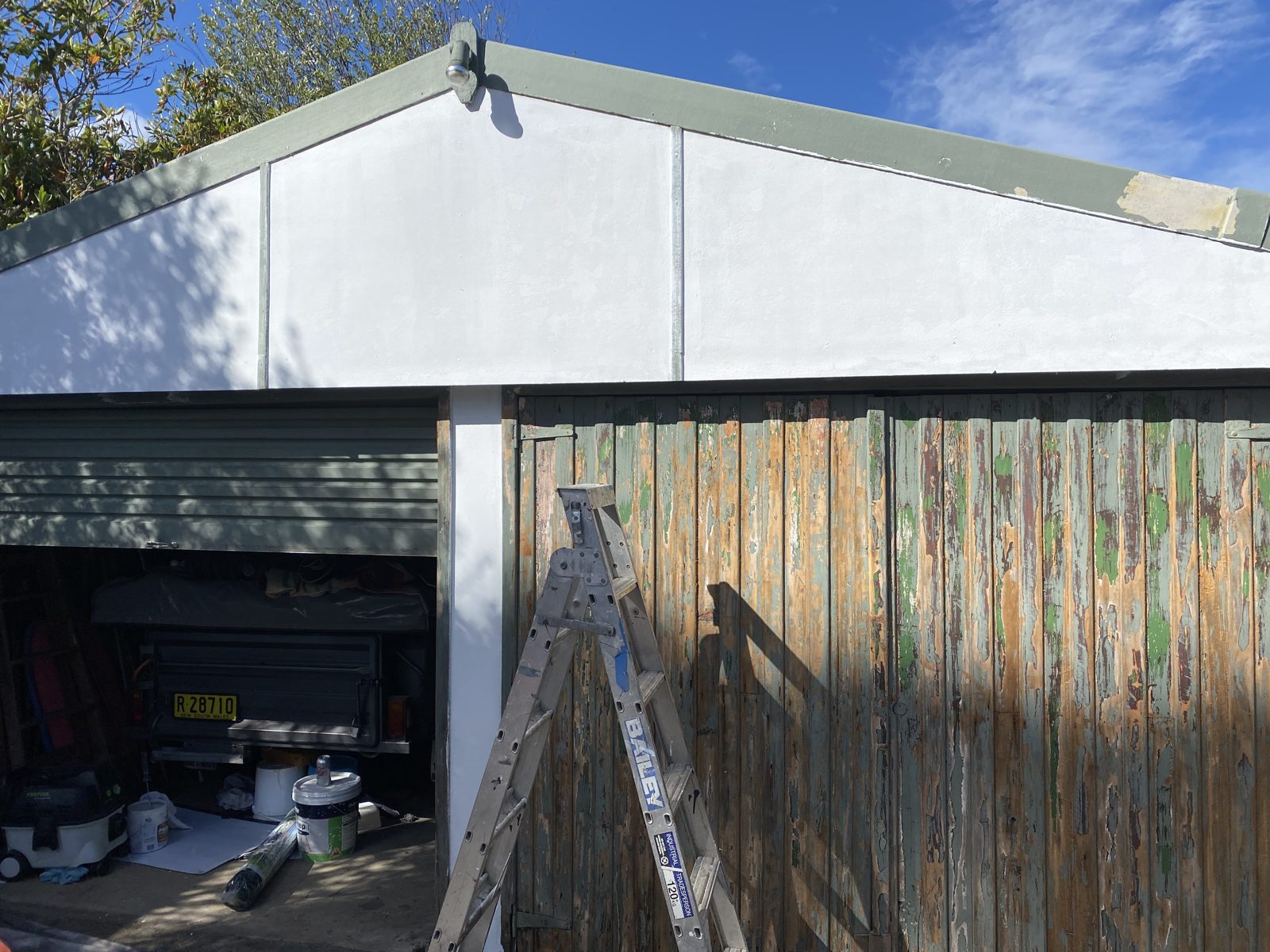
A new coat of paint is only ever as strong as the weakest layer under it. Old oil-based enamels go brittle and chalky. Acrylic over gloss enamel without a sand peels off in sheets. Paint over damp timber blisters. Each of those failures starts underneath.
Take it back to a stable surface and the finish lasts 8 to 10 years. Skip the strip-back and you're painting over a problem. We'll walk away from a job before we do that, and we've said so at a few quotes (that conversation goes about as well as you'd expect).
Prep we do on most jobs:
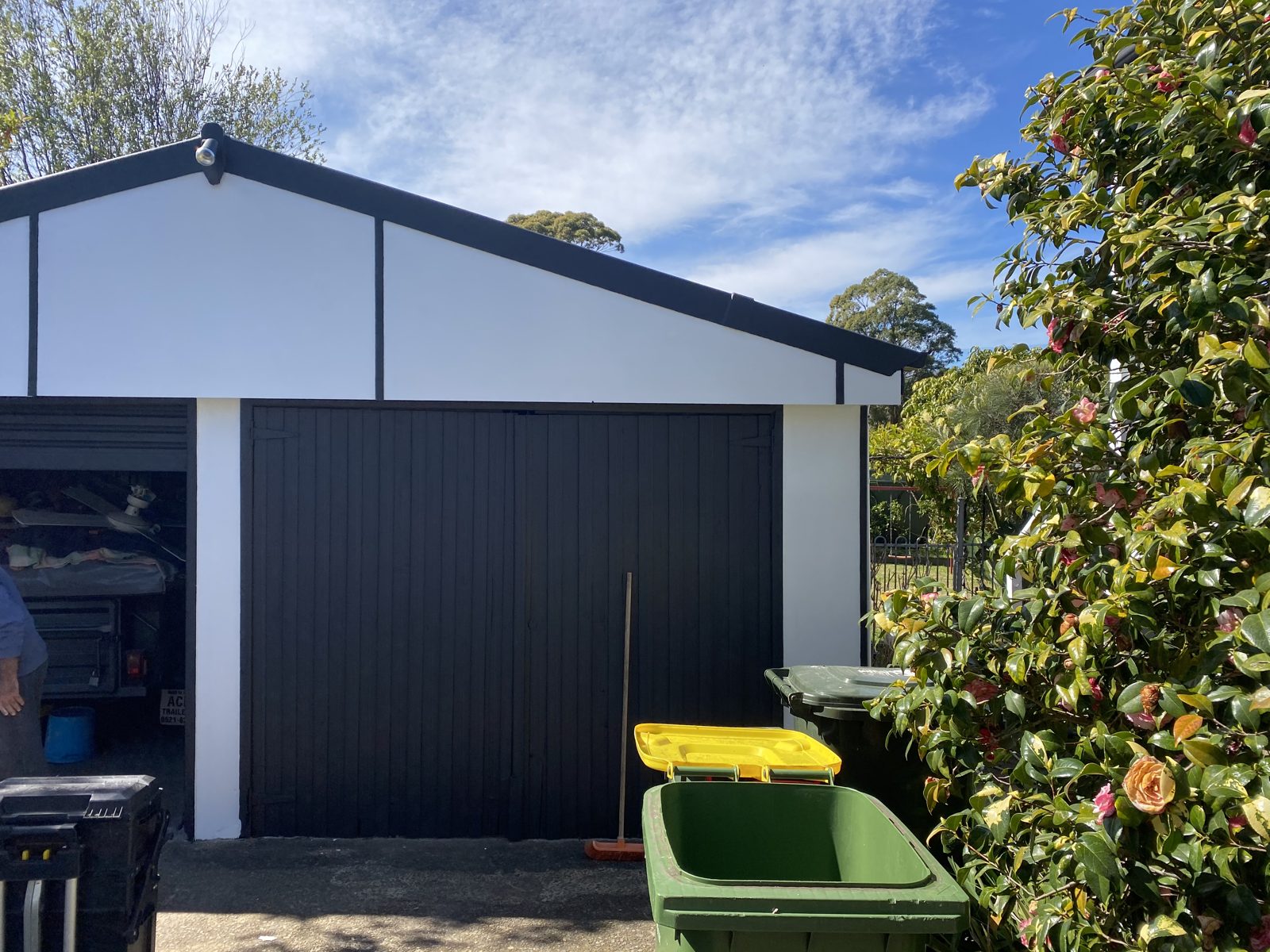
The method depends on what's underneath. Timber weatherboards and joinery get a heat gun kept at low temperature or a chemical stripper, then hand scraping. Render and masonry get a chemical stripper or careful scraping, never a hard wire wheel that tears the surface. Cast iron gets wire brushed back to sound metal.
Where there's lead, we sheet the ground below, keep everything wet, never use an open flame, and clean up with a HEPA vacuum. Chips go in sealed bags for proper disposal. Pregnant women and young kids should stay clear of the work area until clean-up is done, and we'll tell you which days.
On heritage joinery, stripping back also brings the detail back. A turned verandah post or a moulded architrave under 12 coats of paint has lost its edges. Taken back, it looks like it did in 1905. That's half of what heritage painting is about.
Tape test, scrape test and a lead test kit on anything painted before 1970. We only strip as far as the surface needs.
Drop sheets on the ground, garden beds covered, windows closed, the work area marked off.
Heat, chemical or hand scraping, matched to the material. Lead paint removed wet, never dry sanded.
Fill, repair rot, re-putty windows, sand everything smooth so old and new paint sit flush.
HEPA vacuum, wet wipe, chips bagged and disposed of properly. Nothing left in the soil.
Oil-based primer on bare timber, sealer on render, rust-inhibiting primer on metal. The base the finish coats depend on.
| Surface | How we take it back | What it gets next |
|---|---|---|
| Weatherboards | Low-heat gun or chemical strip, hand scrape, sand | Oil-based primer, gap sealant, two topcoats |
| Timber windows and doors | Strip, sand, cut out rot, re-putty | Primer on all end grain, two coats enamel |
| Render | Remove failed paint, patch cracks, sand | Sealer, then breathable or elastomeric finish |
| Brick and masonry | Chemical strip or gentle scrape, salt treatment | Breathable masonry paint so moisture still moves |
| Cast iron and steel | Wire brush or strip to sound metal, treat rust | Rust-inhibiting primer, two coats enamel |
| Interior joinery | Chemical strip in place, sand, fill | Undercoat, two coats water-based enamel |
No. Where the existing paint passes a tape test and is well bonded, we sand it, spot-prime the bare patches and paint over it. We strip only as far as the failure goes, which on most houses is the worst 20 to 40% of the surface.
Yes. Paint used on Australian houses before 1970 could contain up to 50% lead, and most Sydney houses of that age still have it under the newer layers. It's safe left alone and dangerous when sanded dry. We test before we start and remove it wet and contained.
On a weatherboard house with badly failing paint, strip back and prep can be 60 to 70% of the total time. A single-storey cottage might need 1 to 2 weeks of prep before the first topcoat.
For exterior work, yes, with windows closed on the side we're working. For interior lead stripping, we close off the room, and we recommend kids and pregnant women stay out of that part of the house until clean-up is finished.
Nine times in ten it went over a layer that had already lost its grip, over gloss enamel that wasn't sanded, or over damp timber. The new paint is fine. The layer under it failed and took the new paint with it.
We take on strip back and preparation for homes right across Sydney, from the terraces of Paddington to the period homes of Hunters Hill. A few of the areas we cover:
Book a free on-site visit. One room or the whole house, we look at it in person and send you a written, itemised quote. Nothing to sign.
Book Your Free Quote