
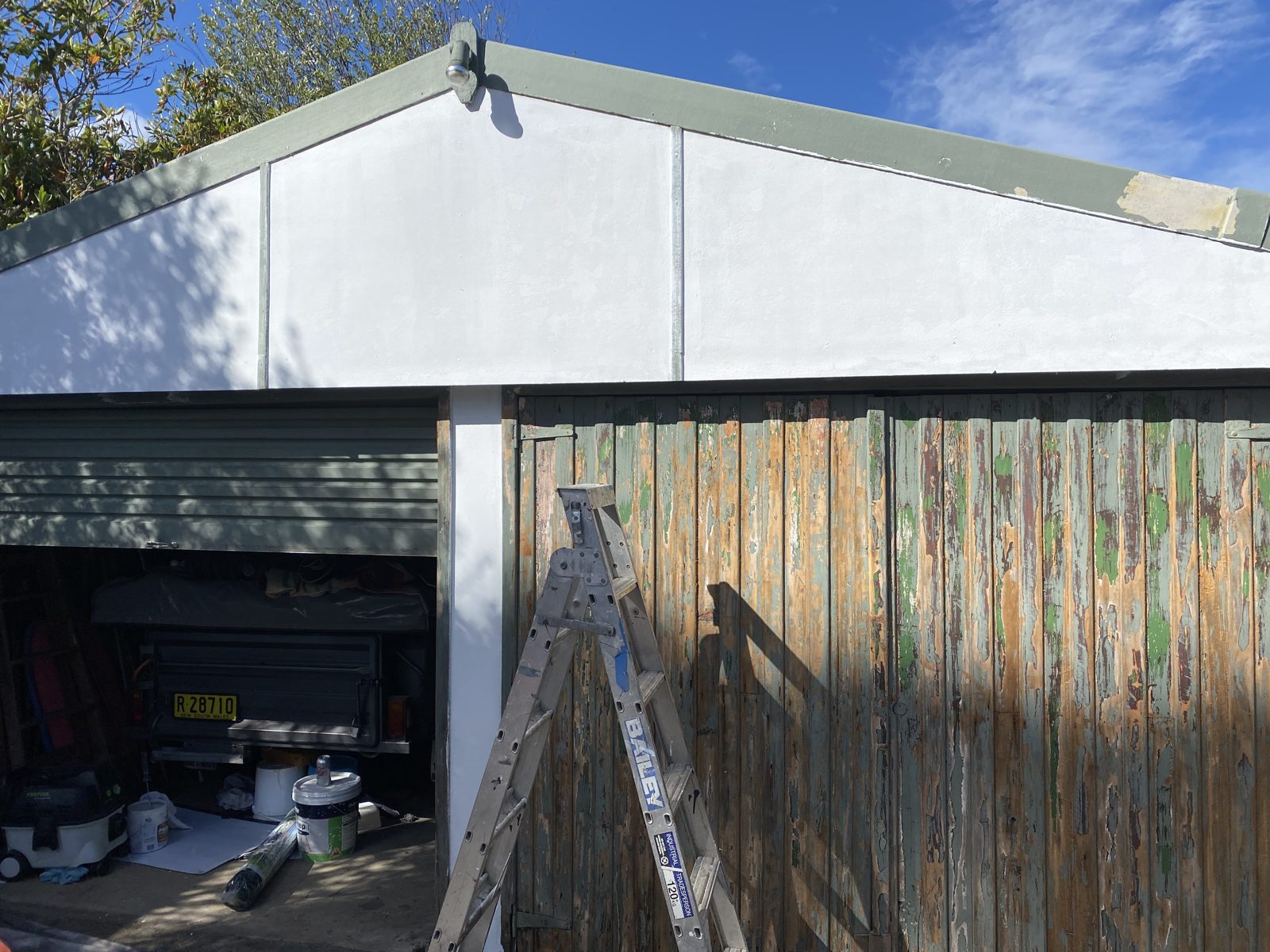
Day three of an exterior job. The owner looks out the kitchen window and says "I thought you'd be painting by now." We're still scraping. On an old house, that's what the first week looks like, and it's why the question of how long it takes to paint a house has a wider answer than people expect.
A straightforward exterior on an average Sydney house in sound condition takes 1 to 2 weeks. An interior takes a few days to a week, depending on room count. A full exterior on an older home that needs stripping and repairs runs 3 to 4 weeks, sometimes longer. The painting is the short part. Prep, drying time and weather set the length of the job.
Those are ranges. Two houses the same size can be a fortnight apart depending on what's under the existing paint, and the only way to know is to look.
Where the days go
People are surprised by the split. On an exterior it looks like this.
- Setting up: drop sheets, protection, moving outdoor furniture, access gear and scaffold
- Washing down: dirt, salt, mould and chalking off, so the new coat has something clean to bond to
- Preparation: scraping, sanding or stripping failed paint, filling, sanding again
- Repairs: timber, render, pointing, rust treatment on metalwork
- Priming and sealing: bare and repaired areas, plus any big colour change
- Coating: two finish coats, with drying time between
- Detail and trim: windows, doors, sills, fascias, lace and fretwork. Slow
- Clean up, then walk the job with you
On many older homes, prep and repair take more days than painting. That's normal. It's the part that decides whether the finish lasts five years or ten.
What makes a painting job run longer
- Paint that has to be stripped, not sanded
- Repairs found once the old paint comes off. Common on older homes
- Access: scaffold on a two-storey home, no side access, work over a neighbour's yard
- Fine detail: fretwork, cast-iron lace, shutters, multi-pane windows
- Damp that has to be fixed and given time to dry before anything's coated
- Dark to light colour change needing an extra coat across the whole house
- Weather, which nobody controls
Why weather matters more than you'd think
Paint needs the right conditions to cure, and staying dry is only part of it. In Sydney the two awkward stretches are a humid summer week, when surfaces stay damp and drying between coats slows right down, and a winter cold snap, when overnight temperatures drop below the 10 degrees many exterior products need to form a proper film.
Then there are summer storms. A clear morning turns into a downpour by 3 pm, and fresh paint that hasn't set gets damaged. A painter who stops and waits is avoiding a redo. Allow a few weather days on any exterior, more through summer. Autumn and spring are the easiest windows here, but the day matters more than the month.
Drying time is part of the job
Paint needs time between coats. Recoat times vary by product and by weather, and pushing a second coat on too early causes problems that show up later: poor adhesion, a soft film, a finish that marks if you look at it. On a humid day a coat that's ready in four hours in spring might need most of the day. This is one of the most common places a rushed job goes wrong.
How the phases stack up
On an exterior repaint in reasonable condition, washing and prep take a big share of the total, priming takes a day or so, and the finish coats take the rest with drying time between. Where a house needs a full strip, the prep alone can run longer than the whole coating stage. On a full home restoration, with repairs, facade work and painting all running together, it's a different kind of programme. Some of ours have run for months, a few for over a year, and we stage them so you can keep living there.
Interior painting: what to expect
A single room is a day or two. A whole interior runs a week or more, depending on room count, ceiling height and how much detail is in the cornices, skirtings and architraves. Interiors are more predictable because weather doesn't come into it. They need more coordination with you, though. Furniture moves, rooms come out of use for a day or two at a time, and things go back only once the paint's dry. Our interior painting page has more.
Can it be done faster?
Some of it. More painters on site shortens the coating stage. Good scheduling stops trades waiting on each other. Having the house ready on day one saves half a day at the start; our post on preparing your house for painters covers that.
Drying time and prep can't be squeezed. If someone quotes three days for an exterior everyone else has called two weeks, the gap is preparation they've left out. That job looks fine for a season. Then it starts telling on itself.
A real day on site
It isn't eight solid hours of painting. The crew arrives early, sets up and masks, works through the middle of the day on whatever surfaces are in the right condition, and spends the last stretch cleaning brushes, packing up and making the site safe.
Outside, the crew follows the shade around the house, because paint on a wall in hot direct sun dries too fast and goes on badly. If you look out at 2 pm and everyone's moved to the other side of the house, that's the job being done right.
What you can do to keep it moving
- Clear the areas around the house before day one
- Cut back plants growing against the walls
- Sort out parking and access, especially on a narrow street
- Lock in colours before the job starts
- Tell us about known problem areas early, so they're planned for
We'll give you a real timeframe when we look at your home, and tell you where the uncertainty is, instead of promising a date we can't hold. See our strip-back and preparation work, then book a free on-site quote and we'll walk you through the programme.